Practice fingerspelling the fun way.
For most people, the hardest part of learning the ASL alphabet isn’t the signs. It’s reading someone else’s fingerspelling.
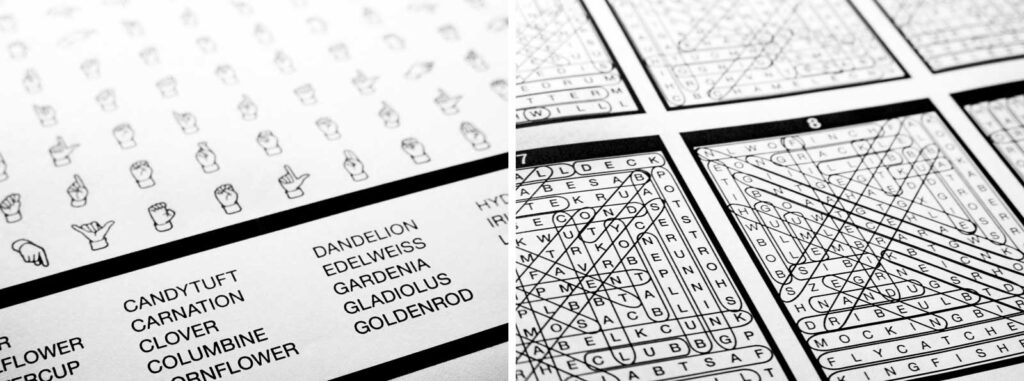
The signs themselves take an afternoon to learn. Reading them at the speed of conversation takes practice. These word search puzzles help you with that practice: you can find each word by learning to read the signs, at your own pace, without having to rely on someone else’s time. A helpful foundation for reading fingerspelling in real conversations.
Read the signs. Find the words.
Signs the way you see them
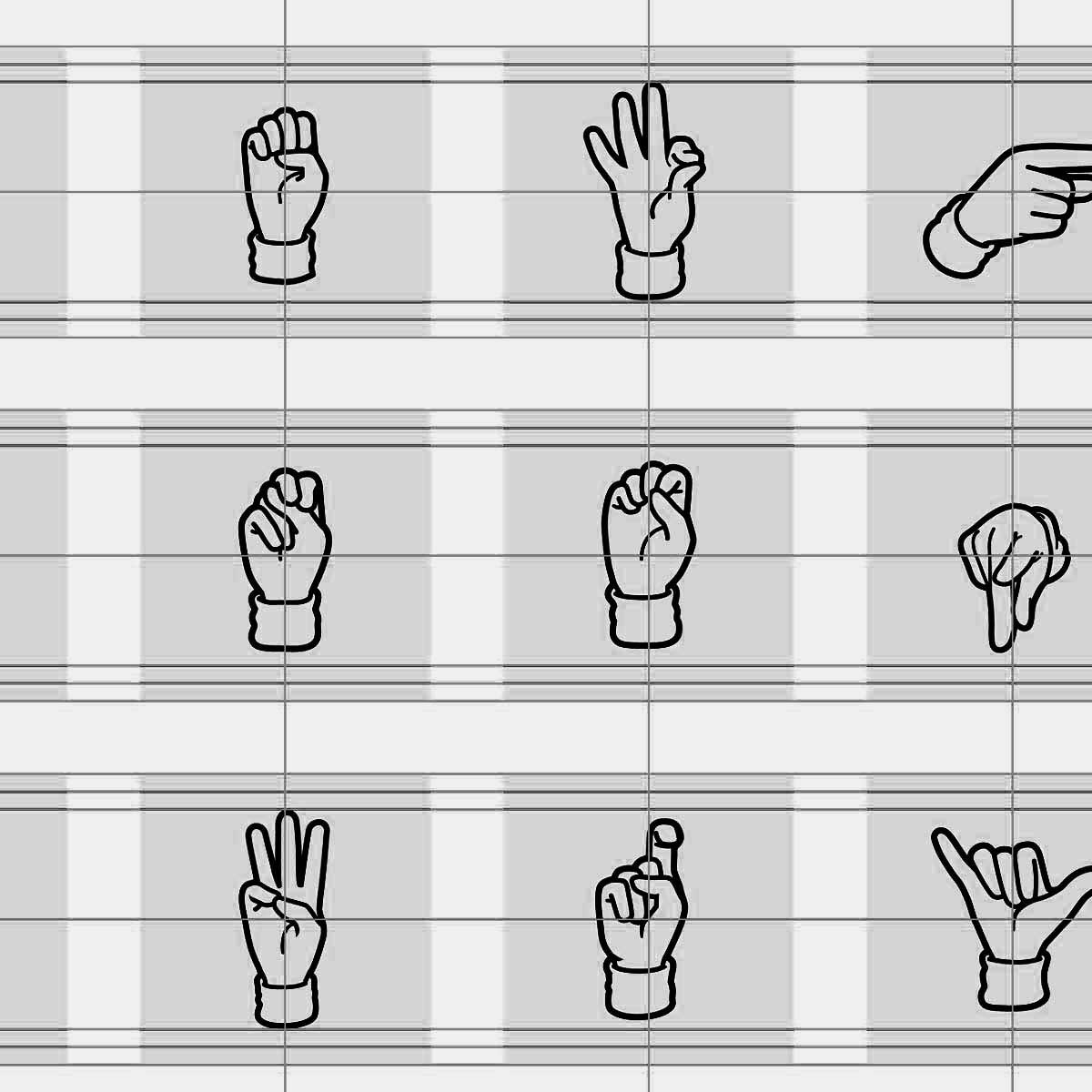
Most fingerspelling charts show the hand from the angle that is easiest to draw (or recognize). In conversation, you see the other person’s hand mostly from the front. That is why every sign in these books is shown from the viewer’s perspective, even though a few letters are slightly harder to recognize that way. When you’re learning, what you see is what sticks. And once something has stuck, it’s hard to unlearn.
Expert-validated
The font is based on professional hand-shape illustrations, individually created and validated by independent, acknowledged ASL sign language experts. Optimized for correct learning, not for the ease of illustration.
A bridge into sign language
Fingerspelling is an easy first win on what can be a longer road. It comes naturally to anyone who can read and write; it is quick to learn, and it can make one curious about the rest of a sign language. Because it connects the written alphabet many already know with sign language, it works as a bridge between the two.
At your own pace
Everybody learns differently. There is no class schedule and no practice partner to wait for: work through a puzzle in one sitting or come back to it across a week. The pace is yours. Have fun and don’t stress.
Reading fingerspelling is its own skill
Spelling a word with your own hand and reading someone else’s fingerspelling are two different skills, and reading is the harder one to practice on your own. These puzzles train exactly that: recognizing each hand shape at a glance.
A foundation, not the whole practice
You learn the letters of an alphabet before you read words. In the same way, you learn to recognize each hand shape before you follow fingerspelling in conversation. The books show hand shapes as still images; real fingerspelling is in motion, and every signer has a personal slant. So use the books as your foundation and practice with people, too. Mastering the hand shapes gives you a solid base for everything that follows.
A real word search challenge
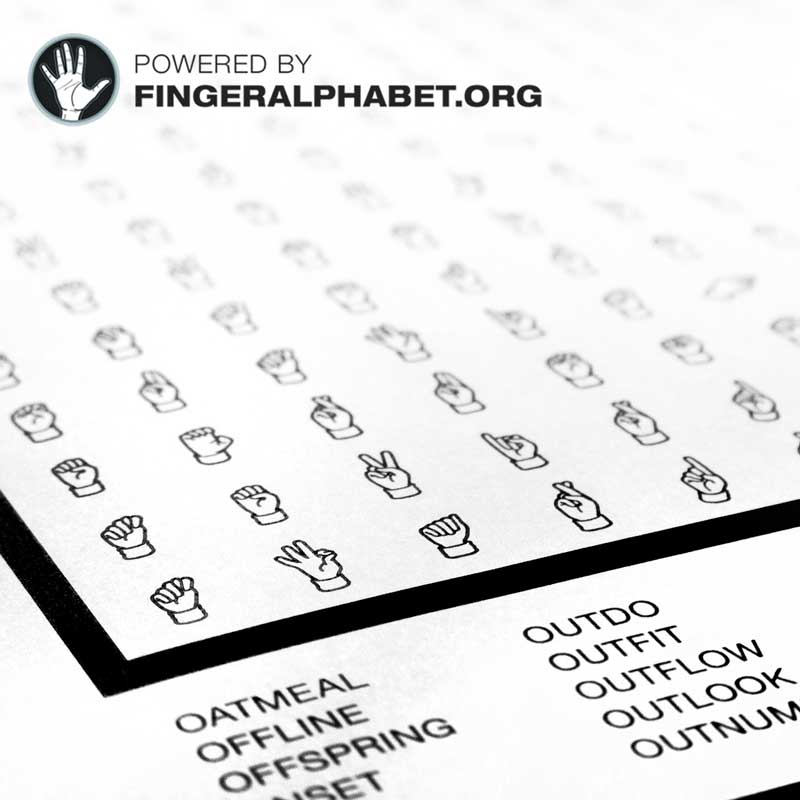
These are real, complex word searches on real topics, from astronomy and baseball to Shakespeare and chess: 108 puzzles per volume, dense grids, many crossing words. Word search fans looking for a new challenge get an extra twist: the grid is in ASL fingerspelling. Word lists and solutions are printed in regular letters, so you can check every answer.
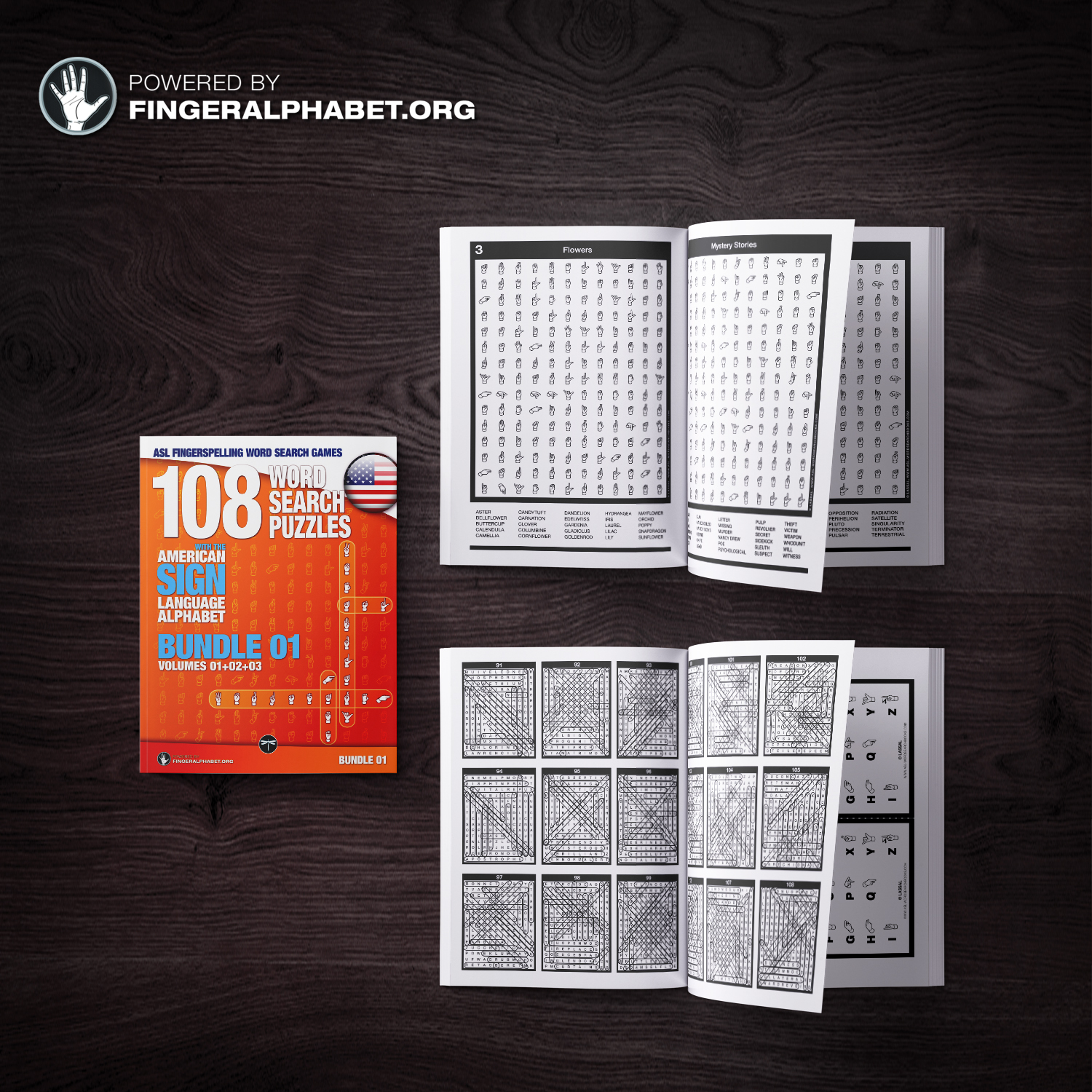
ASL Word Search Books
Building bridges into the worlds of sign language.
Frequently Asked Questions
Is this a full ASL course?
No. These books are collections of ASL fingerspelling word search puzzles for recognizing the hand shapes of the American Sign Language alphabet. They are not a full American Sign Language course. Use the books as a foundation for reading fingerspelling, alongside practice with people.
Do I need to know ASL already?
No. Every book includes a complete ASL alphabet chart, so you can start right away, even if you have never fingerspelled before. Keep the chart next to you for the first puzzles. If you want a printed chart for the wall as well, the 32 free poster charts on this site are made for that.
What is the difference between fingerspelling and American Sign Language?
American Sign Language (ASL) is a complete language with its own grammar, syntax, and forms of expression. It uses hand shapes, movements, facial expressions, and body posture. Fingerspelling is not a language of its own but a tool within sign language. It represents the letters of the written alphabet as hand shapes and is used mainly for names, borrowed words, and unfamiliar terms. For anyone who can read and write, fingerspelling is a structured, manageable way into the visual communication of sign language.
Why is “from the viewer’s perspective” important?
Fingerspelling illustrations usually show hand shapes from an angle that is easy to draw. While you are learning, these depictions are not ideal. That is why these books show every hand shape from the viewer’s perspective, even though a few letters are slightly harder to recognize that way. When you’re learning, what you see is what sticks.
How were the hand-shape illustrations developed?
All hand-shape illustrations were created individually for Project FingerAlphabet and drawn from the viewer’s perspective: the way you actually see hand shapes in conversation, not the way they are easiest to draw. The Project FingerAlphabet ASL alphabet was validated by several independent, acknowledged experts. The professional ASL fingerspelling font used in these books was developed from these validated illustrations.
Can I check my answers in regular letters?
Yes. The word lists and solutions are printed in regular letters, so you always know which words you are looking for and can check every answer at the back of the book. Only the grids use hand shapes.
Do I have to start with a specific volume?
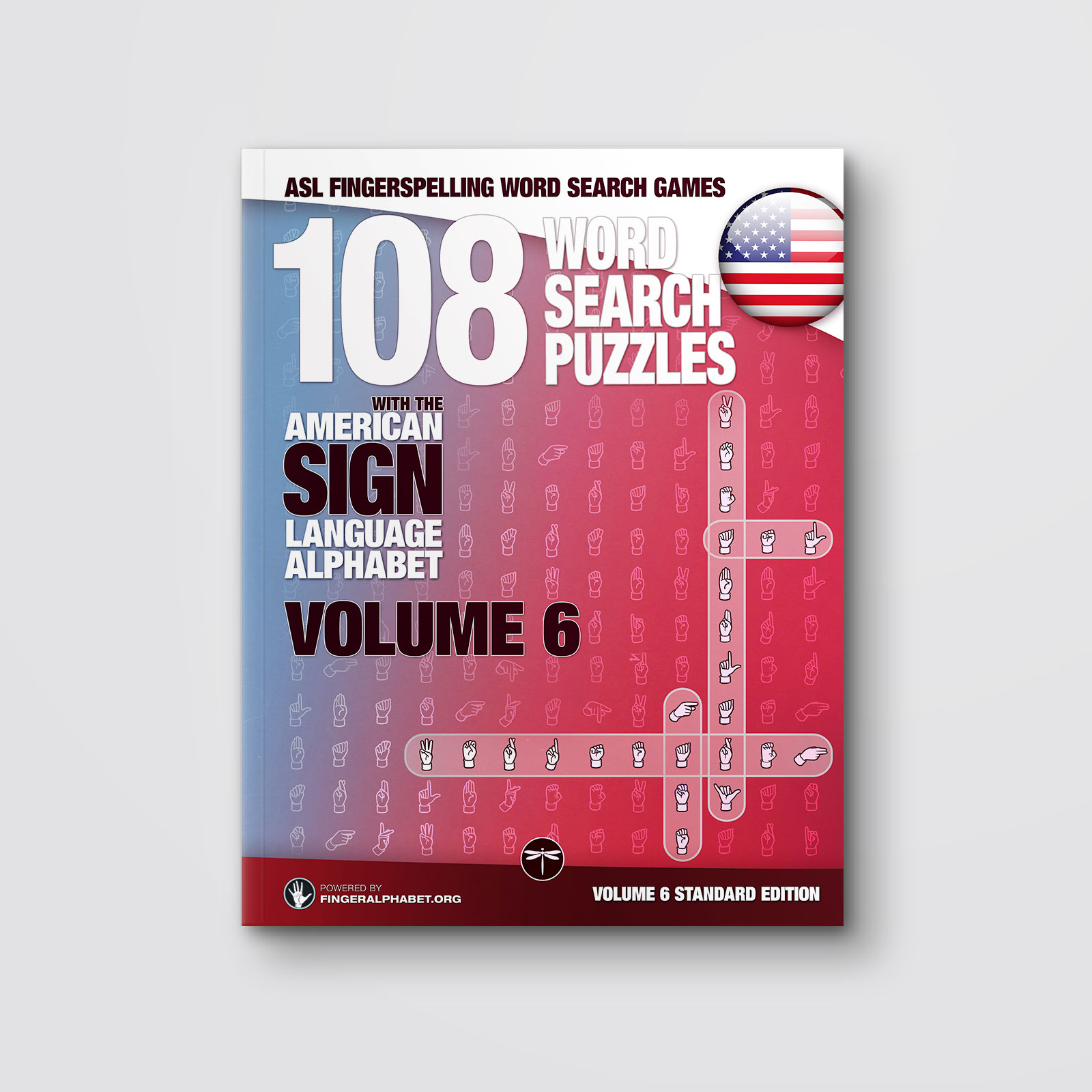
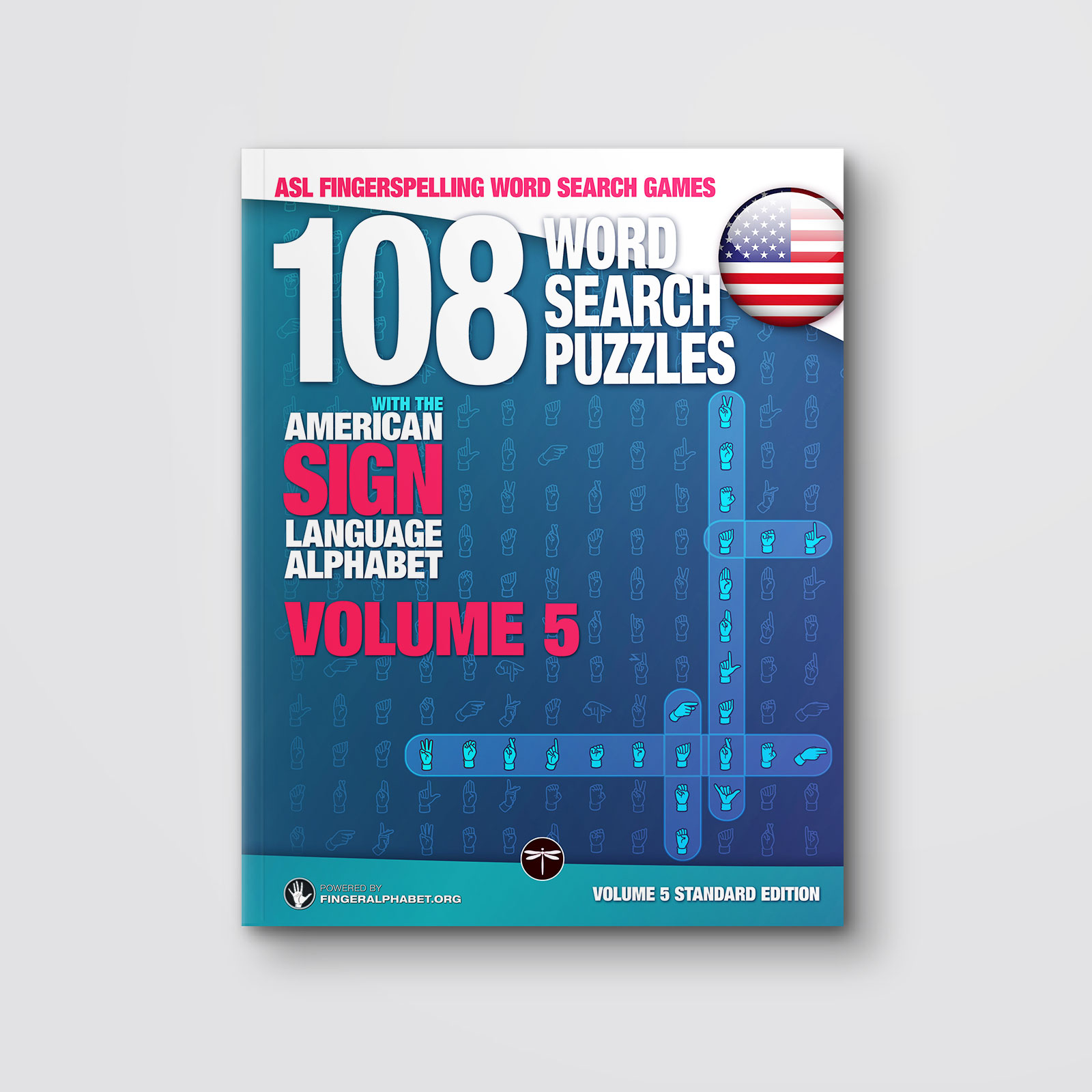
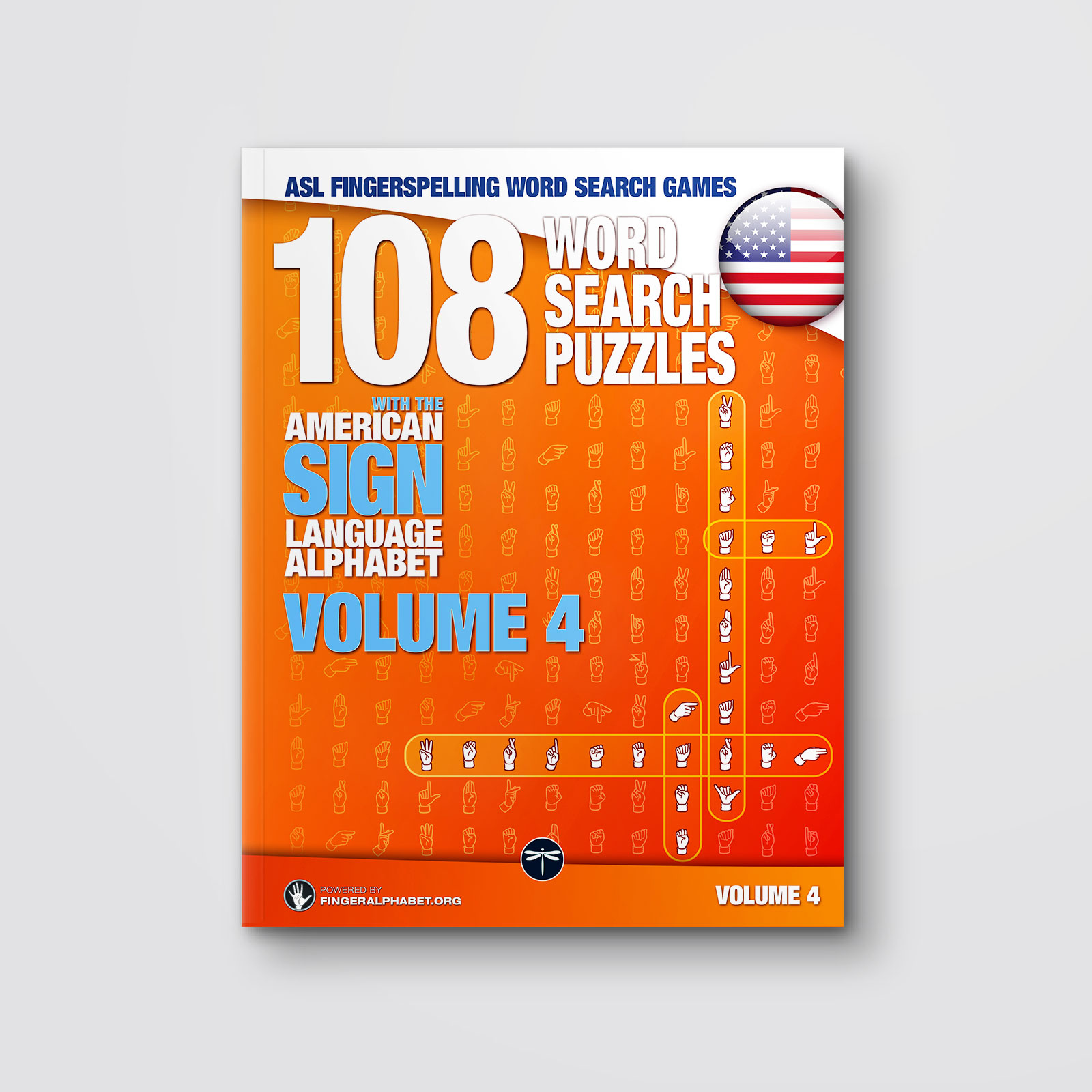
No. Each volume stands on its own, with its own mix of topics, so you can start with any volume. Puzzles do not repeat between volumes. Volume 4 is the omnibus edition of Volumes 1, 2, and 3, which are out of print, so the series on this site begins there.
Which series is right for me?
It depends on who will be solving the puzzles. ASL Fingerspelling Word Search Games is written for teens and adults: 108 puzzles per volume, medium to challenging, with a plain, clean layout. FingerAlphabet Cool Kids is written for kids ages 8 and up (grades 3–5): 36 puzzles per book, larger hand shapes, illustrations, and a focus on English grammar. Adults who would like larger hand shapes or an easier start may also enjoy the Cool Kids books, as long as they don’t mind the illustrated, kid-friendly design. The Books page compares both series in detail.
Are the books suitable for homeschooling?
Yes. The books fit well as the fingerspelling part of a homeschool ASL program. The alphabet chart is included, the solutions are at the back, and every puzzle works on its own, so you can plan one puzzle a day or a few a week. For children in grades 3–5, the FingerAlphabet Cool Kids books combine fingerspelling with grammar practice based on grade-appropriate teaching material.
Are the books a good gift?
Yes: for someone learning ASL, for a teacher, or for a word search fan who would like something new. The books for teens and adults are medium to challenging and suit people who enjoy a real search more than a quick one. For children, or for anyone who prefers larger hand shapes, the Cool Kids books are the gentler choice. Every book with 108 puzzles includes extra alphabet charts to cut out, so the recipient can practice with a partner right away.
Where can I buy the books?
Online at Amazon, Barnes & Noble, and Bookshop.org, which supports independent bookstores in the US. Any bookstore can also order the books by ISBN; you’ll find it on each book’s page. Libraries can order them through the usual book-trade channels.
Are the books available as e-books?
No. The puzzles are meant to be solved on paper, with a pen or pencil in hand, and the hand shapes are sized for the printed page. All books are paperbacks.
Are free ASL alphabet materials available?
Yes. Project FingerAlphabet offers 32 free ASL alphabet poster charts: ready-to-print PDF files in US Letter format, in various colors and in low-toner black and white. Enter your email address on this site and you’ll receive the download link. Print as many as you like for your wall, your classroom, or a practice partner.
S.T. Lassal &
Project FingerAlphabet
S.T. Lassal is the professional illustrator and author behind Project FingerAlphabet, a pro bono publico project nominated for the German Award for Civic Engagement. Its free alphabet charts for more than twelve sign languages are used by schools, churches, charities, and organizations in many countries.
Building bridges into the worlds of sign language.