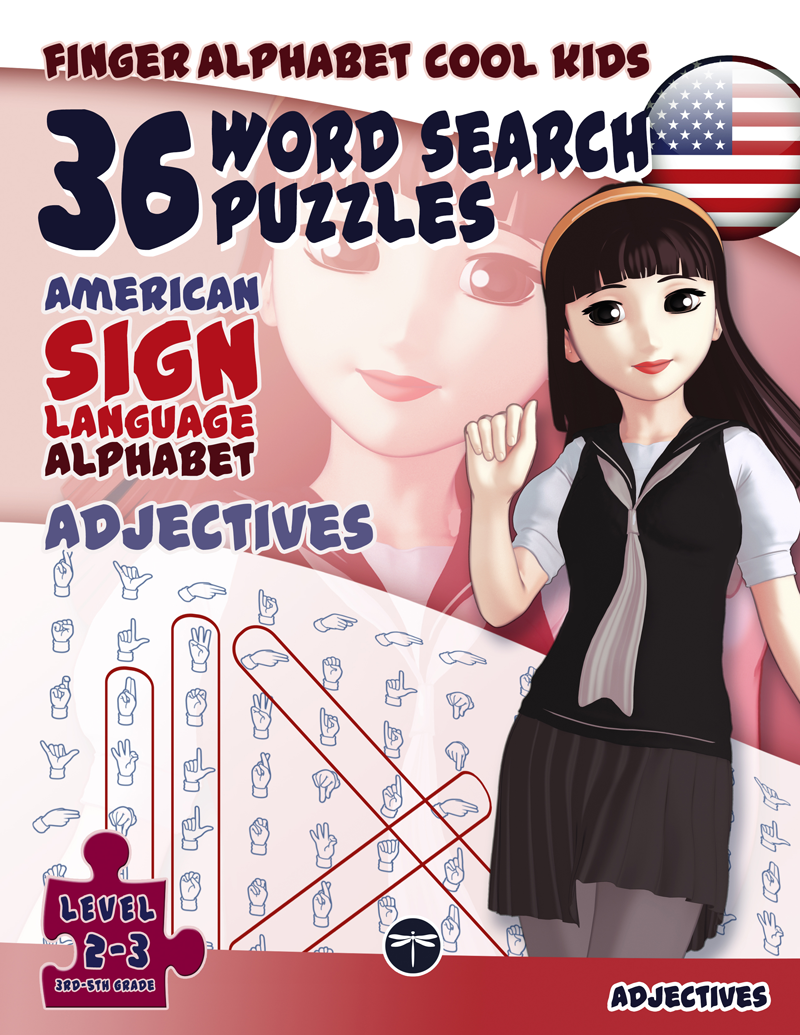
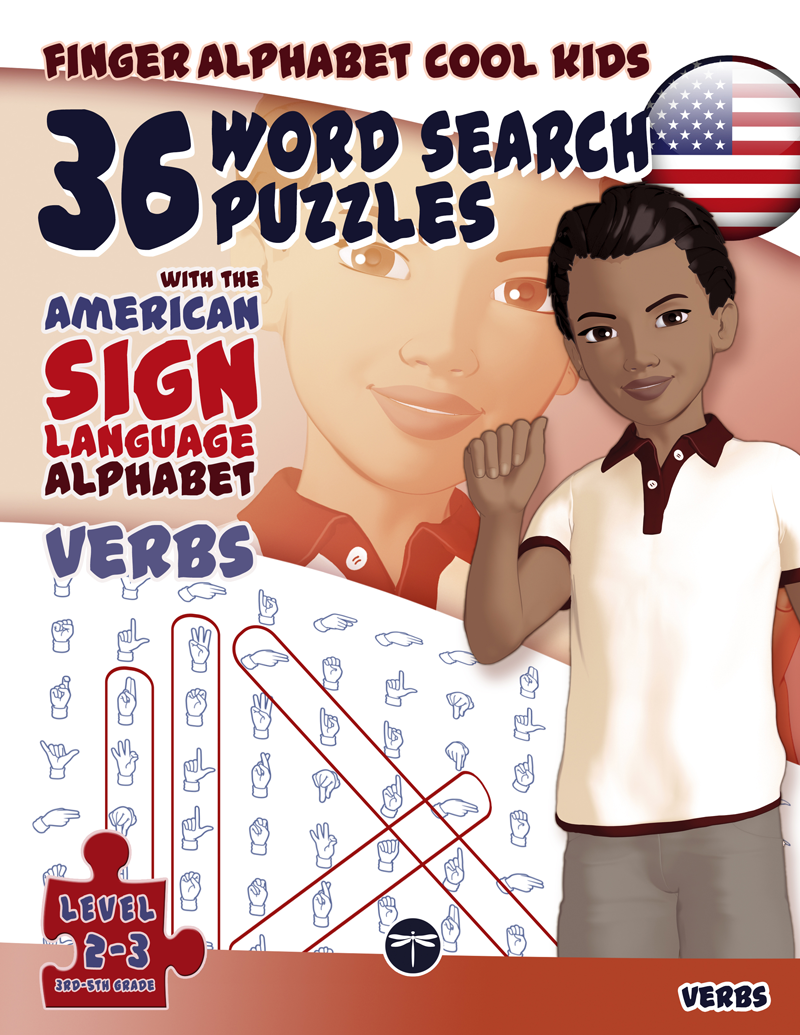
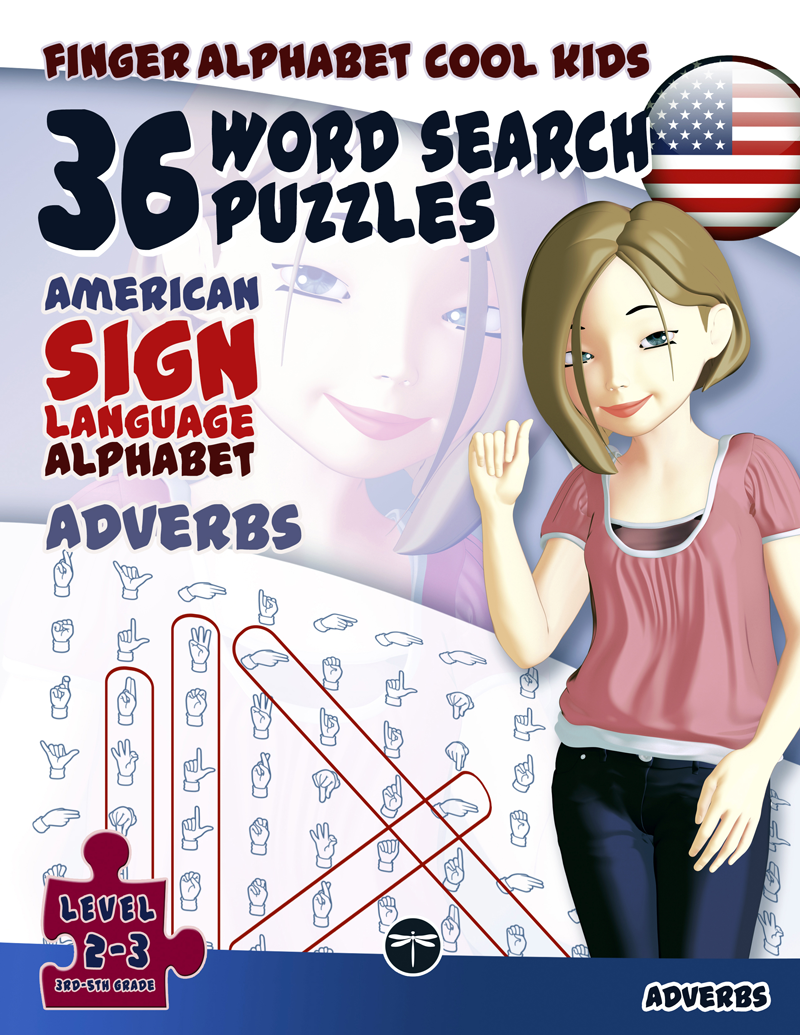
Clean pages, clear grids
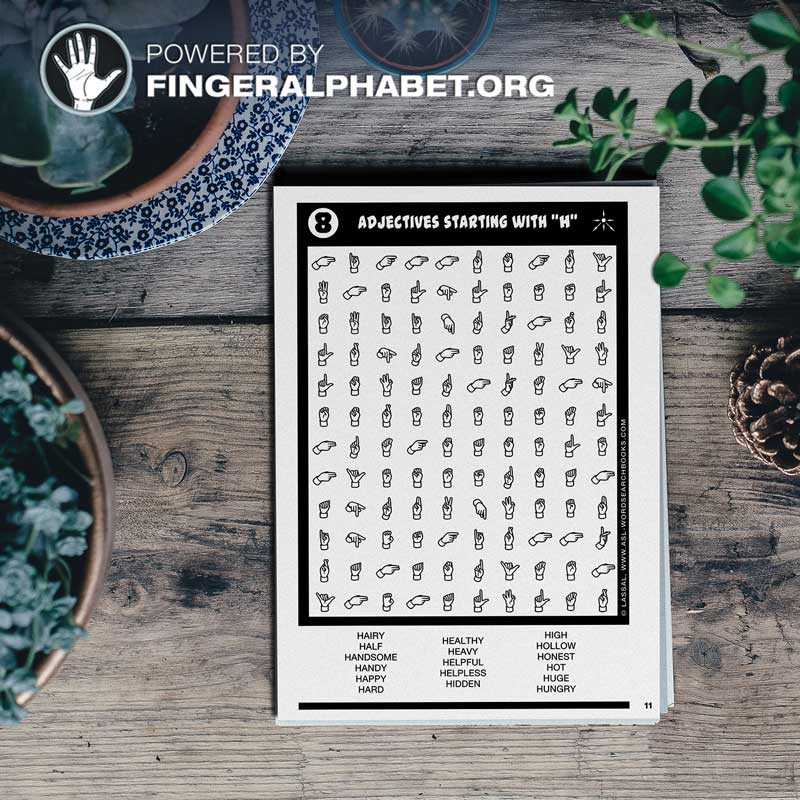
Each puzzle has a clear grid with plenty of space, and the word list is printed in regular letters. Kids can concentrate on what matters: reading the hand shapes.
A hint for every puzzle
Next to each puzzle’s title, a small icon shows the directions in which the words are hidden. Kids know where to look and can focus on recognizing the signs.
Learn to fingerspell, step by step
Illustrated basic instructions at the beginning of each book show how fingerspelling works, so kids can start without any prior knowledge.
The whole alphabet at a glance
An overview chart at the beginning of each book shows every hand shape, ready to look up while solving.
Solutions at the back
Every puzzle has its solution at the back of the book, printed in regular letters, so kids and parents can check answers quickly.
Charts to share (Omnibus)
The Omnibus includes alphabet charts to cut out. Kids can give one to a friend, a classmate, or a family member and practice reading each other’s fingerspelling.
Frequently Asked Questions
What age are the books for?
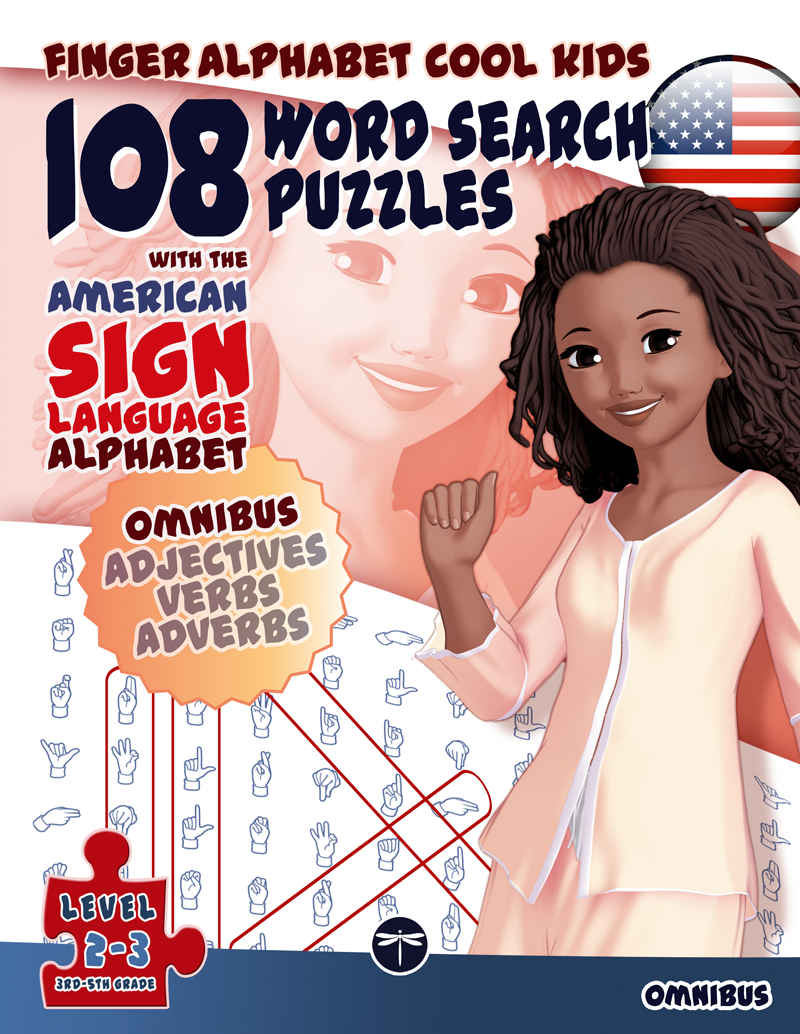
The books are written for kids ages 8 and up, roughly grades 3–5, and a 2-3 reading level. The word lists are grade-appropriate teaching material for this age group, and the puzzles are easy enough for kids to solve on their own. Older kids and adults can use them too, especially if they like larger hand shapes and don’t mind the illustrated, kid-friendly design.
Does my child need to know ASL?
No. Each book includes illustrated basic fingerspelling instructions, so kids can start right away, even if they have never fingerspelled before. Many families like to learn the alphabet together: a parent or sibling who joins in turns the puzzles into a shared activity. If you’d like a chart for the wall as well, the free ASL alphabet posters on this site work well alongside the books.
What do kids learn besides fingerspelling?
Grammar. Each book focuses on one part of speech: adjectives, verbs, or adverbs. Because the word lists are grade-appropriate teaching material for grades 3–5, kids meet words that match what they learn in school, so every puzzle practices fingerspelling and English at the same time.
How difficult are the puzzles?
They are made for kids, so they are much easier than the books for teens and adults. The hand shapes are printed larger, the grids are smaller, and each puzzle hides fewer words. Next to each puzzle’s title, an icon shows the directions in which its words are hidden, so kids know where to look. That way they can focus on reading the hand shapes.
Why are the signs shown from the viewer’s perspective?
Because that is how kids will see fingerspelling when someone signs to them: the other person’s hand, from the front. Many fingerspelling illustrations use the angle that is easiest to draw instead. Hand shapes learned from the wrong angle can be hard to unlearn later, so these books show the right view from the start.
Should I get the single books or the Omnibus?
That depends on how much your child wants to do. A single book is a shorter project with 36 puzzles on one part of speech, a good way to try the series. The Omnibus contains all three books, Adjectives, Verbs, and Adverbs, plus alphabet charts to cut out and share. It costs less than the three single books together, because one longer book is cheaper to print than three short ones. The single books also don’t include the cut-out charts.
Are the books suitable for homeschooling and the classroom?
Yes. The books combine fingerspelling with grade-appropriate grammar practice, the solutions are at the back, and every puzzle works on its own. That makes them easy to fit into a homeschool week or to use as a short classroom activity.
Can adults use the Cool Kids books?
Yes. Adults who are just starting with fingerspelling, or who prefer larger hand shapes, may find the Cool Kids books a gentle way in. Keep in mind that the books are illustrated and designed for children. If you’d like a plain layout and a real challenge, ASL Fingerspelling Word Search Games, the series for teens and adults, is the better fit.
Are the hand shapes the same as in the series for teens and adults?
Yes. All books use the same custom sign language font, with every sign shown from the viewer’s perspective. In the Cool Kids books, the hand shapes are printed larger, which makes them easier to read.
S.T. Lassal &
Project FingerAlphabet
S.T. Lassal is the professional illustrator and author behind Project FingerAlphabet, a pro bono publico project nominated for the German Award for Civic Engagement. Its free alphabet charts for more than twelve sign languages are used by schools, churches, charities, and organizations in many countries.
Building bridges into the worlds of sign language.